EDITORIAL BUYING GUIDE
Backpack Review Guide: Finding Your Trail Fit
A pack should fit the person carrying it before it fits a gear list. This editorial guide explains how to evaluate a hiking backpack, rather than assigning a score to a product we have not tested.
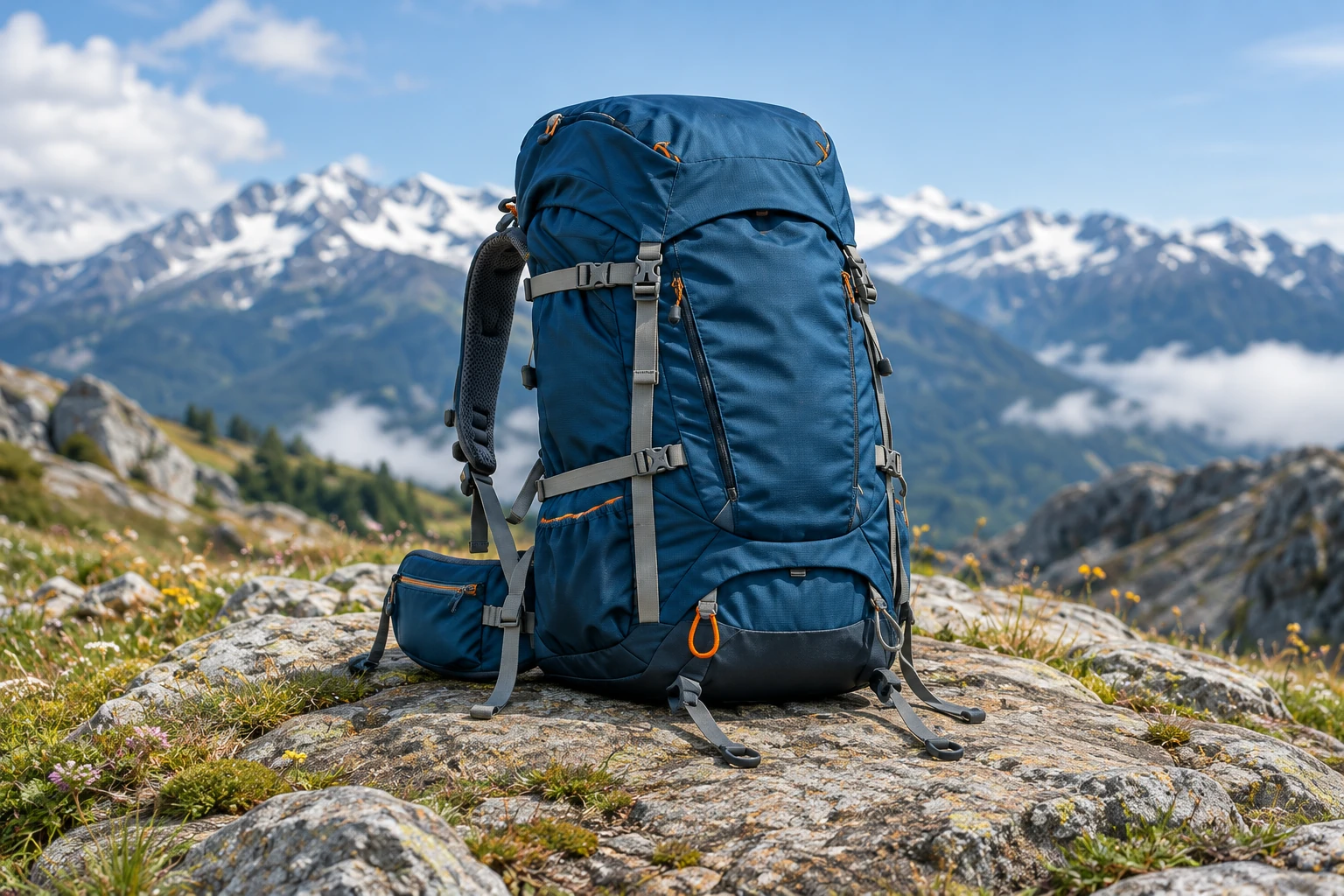
AI-generated illustration of generic equipment. Not a photograph of a tested product.
Start with the trip, then choose capacity
For a short outing, space for water, layers, food and emergency essentials matters more than a headline capacity figure. Overnight trips add shelter and sleep equipment. Gather your actual kit before shopping and allow room for the conditions you expect. A larger bag does not automatically carry better: unused volume can encourage unnecessary weight.
Fit is the most important feature
Measure torso length using the manufacturer’s instructions. Try the pack with a representative load and adjust the hip belt, shoulder straps and load lifters in that order. The belt should sit securely over the hips without pressure points. Walk, climb a step and turn your head. If the harness rubs after a few minutes, do not assume a longer walk will improve it.
Review the details you will use
Check whether water bottles can be reached while wearing the pack, whether rain layers have a convenient pocket and whether compression straps stabilize a partial load. A ventilated back panel can be comfortable in warm weather, but its shape may reduce usable space. A rain cover helps with showers; a suitable internal liner offers another layer of protection for important dry items.
Durability and weight are a tradeoff
Light fabric can reduce carried weight, while reinforced panels may tolerate abrasion better. Neither quality follows from weight alone. Examine stitching, buckles, zipper access and the availability of repairs. Judge comfort with your expected load rather than comparing empty bags.
Pros to look for
- Adjustable harnesses can accommodate different torso lengths.
- Useful pockets reduce repeated unpacking.
- A supportive hip belt helps manage an overnight load.
Tradeoffs to consider
- Larger capacity can encourage overpacking.
- Complex suspension adds weight and may trap dirt.
- A good specification sheet cannot guarantee personal fit.
Who this guide suits
Day hikers moving into weekend trips who want a repeatable way to compare packs in person.
Our conclusion
Prioritize loaded comfort, appropriate capacity and simple access. Keep the model that disappears on your back, rather than the one with the longest feature list.
Build the rest of your kit
Consider the whole load: shelter, carrying system and footwear affect one another. These related guides explain the other parts of a weekend setup.
Hiking Boots: Fit, Grip and All-Day Comfort
A straightforward guide to boot fit, sole stiffness and waterproofing for varied trail conditions.
Trekking Poles: Locks, Length and Trail Handling
Find a practical balance of adjustability, packability and comfortable grip for your walking style.
How we approach reviews
Published by xiaoheilong studio. These guides are research-oriented editorial explanations of equipment design, not laboratory or field tests. We do not assign performance scores without test evidence. Check the manufacturer’s current specifications and instructions for any model you are considering. No prices, discounts or product availability are asserted.
Questions or corrections? yoyohappy@cc.com.